CNC Milling Machines in Plastic Mold Manufacturing: Fundamentals, Process Insights, and Productivity Gains
KAIBO CNC
2026-04-10
Technical knowledge
This article provides a practical, engineering-focused analysis of how CNC milling machines improve plastic mold manufacturing across accuracy, efficiency, and repeatable machining of complex geometries. It starts from common production pain points—poor surface finish, excessive mold trials, and high operator-dependent variation—then explains the core CNC principles that address them, including servo control, coordinate system setup, and fixture rigidity. Special attention is given to compact double-column vertical CNC milling machines and why their structural stability supports challenging features such as complex 3D surfaces, deep grooves, and fine details. A structured comparison between conventional milling and CNC machining highlights differences in cycle time, consistency, and scrap rate, complemented by a representative case where mold trials were reduced by 30% through improved toolpath strategy and process standardization. The article concludes with actionable guidance for equipment selection and process upgrades, and invites readers to evaluate fit for their own molds via a technical white paper hub and online consultation from Kaibo CNC.
CNC Milling in Plastic Mold Manufacturing: Practical Fundamentals, Process Levers, and Why Precision Becomes Predictable
In plastic mold manufacturing, “good enough” geometry often becomes expensive after the first trial: extra benching, more spotting, and a longer path to stable mass production. Modern CNC milling machines—especially compact double-column vertical CNC milling machines—are increasingly chosen not just for speed, but for repeatable accuracy on complex mold features where manual variability becomes the hidden cost.
This article explains how CNC milling reduces typical mold pain points (surface finish inconsistency, excessive tryouts, human error) and outlines a process framework that both engineers and decision-makers can apply when evaluating an upgrade.
Where Plastic Mold Shops Lose Time: The Pain Points That Show Up After “Machining Is Done”
Plastic molds are judged less by how fast steel is removed and more by how consistently the mold performs across tryouts and production. In many workshops, the largest delays occur downstream of machining—during fitting, polishing, and repeated trials—because the original geometry was not stable enough.
Common technical symptoms
Visible tool marks or uneven surface finish on cavities and cores
Dimensional drift on parting lines and shut-offs after hand rework
Depth inconsistency in deep grooves, ribs, and waterline areas
Micro-features (text, vents, small radii) deforming under unstable cutting conditions
Business consequences buyers actually feel
More spotting/benching hours and higher reliance on a few senior fitters
Tryout cycles extended; engineering changes become harder to isolate
Inconsistent lead times and higher rework risk when demand spikes
Higher scrap probability on near-finished blocks due to late-stage corrections
CNC Milling Fundamentals That Matter in Mold Work (Not Just in Brochures)
CNC milling solves mold problems when the process is treated as a controlled system: machine structure + servo control + coordinate definition + fixturing + toolpath strategy. In mold making, the goal is not only accuracy on paper, but predictable repeatability when steel hardness, tool wear, and feature access become challenging.
Four practical levers that determine results
Servo system stability & interpolation (3-axis linkage): smooth motion reduces “corner marks” on complex curves and helps maintain consistent chip load, supporting better cavity finish and tighter dimensional control.
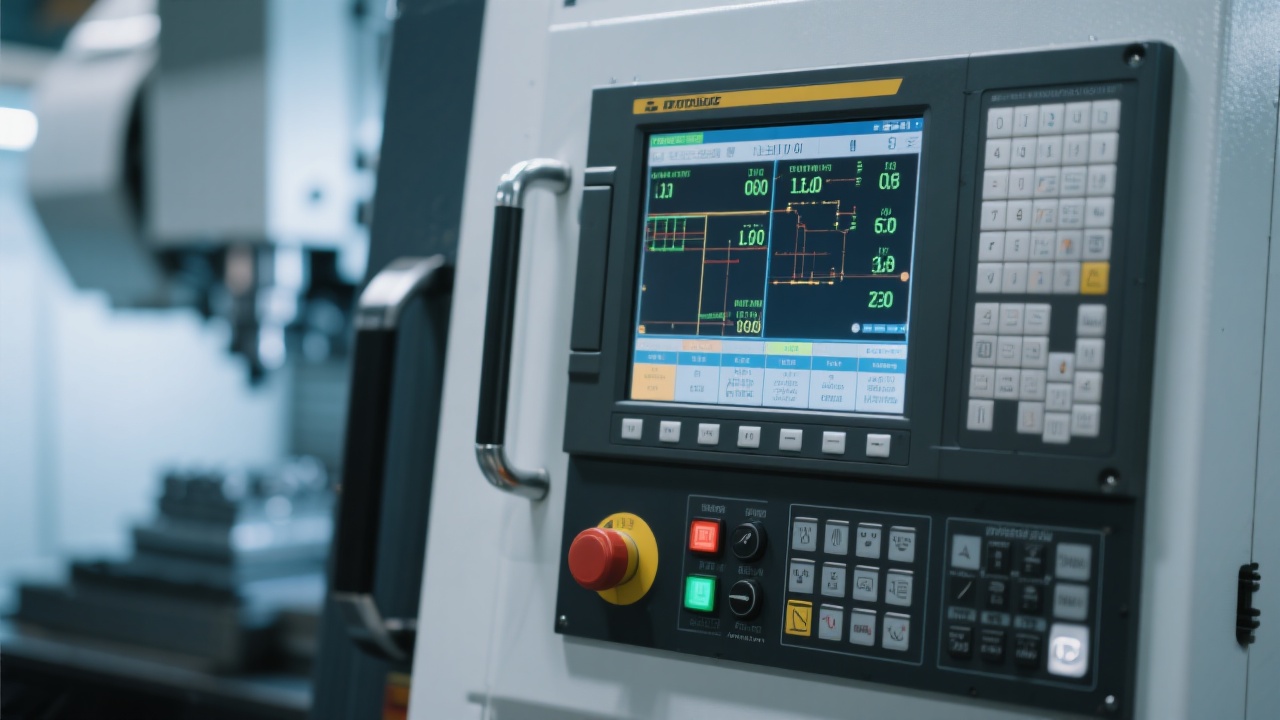
Coordinate system setup & referencing: reliable datum strategy (work offsets, repeatable probing routines) prevents stack-up errors across cavity/core, inserts, sliders, and electrodes.
Fixture rigidity and clamping repeatability: mold blocks are heavy; poor support introduces micro-deflection that shows up as uneven depth in grooves and sealing surfaces.
Toolpath optimization: step-over, lead-in/out, rest machining, and constant scallop strategies can improve surface quality and reduce polishing time—often more impactful than simply increasing spindle speed.
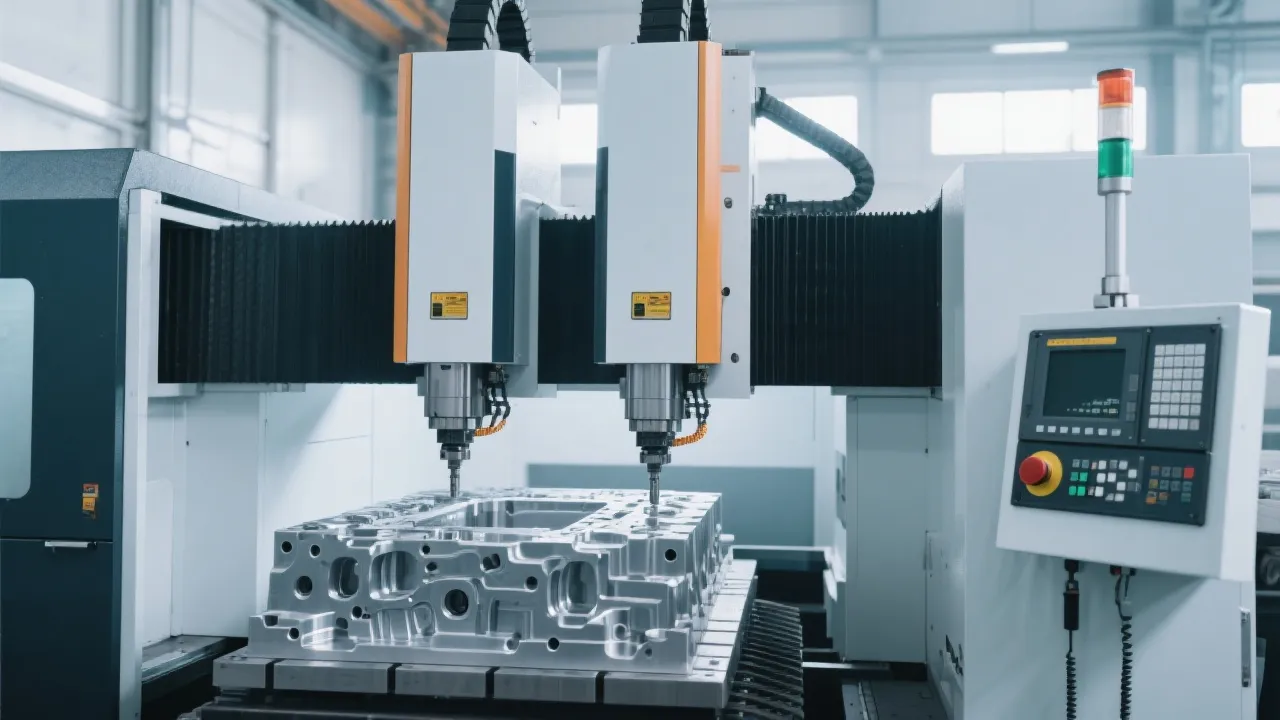
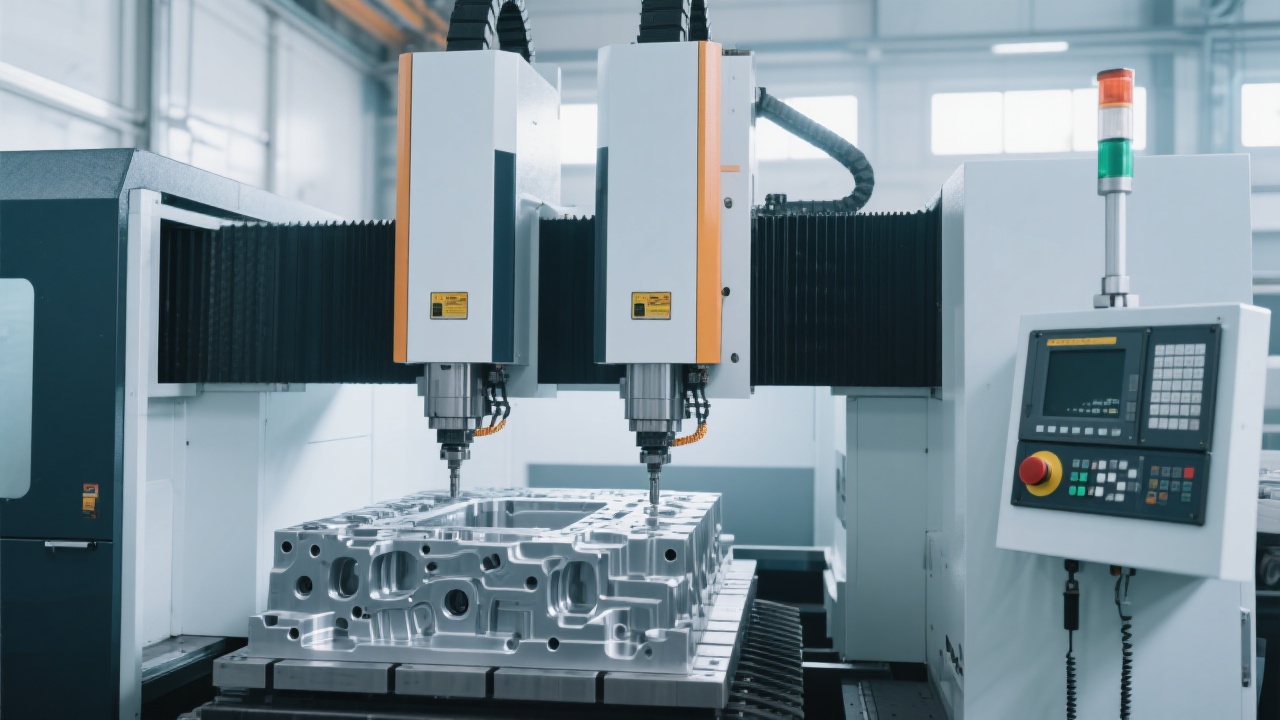
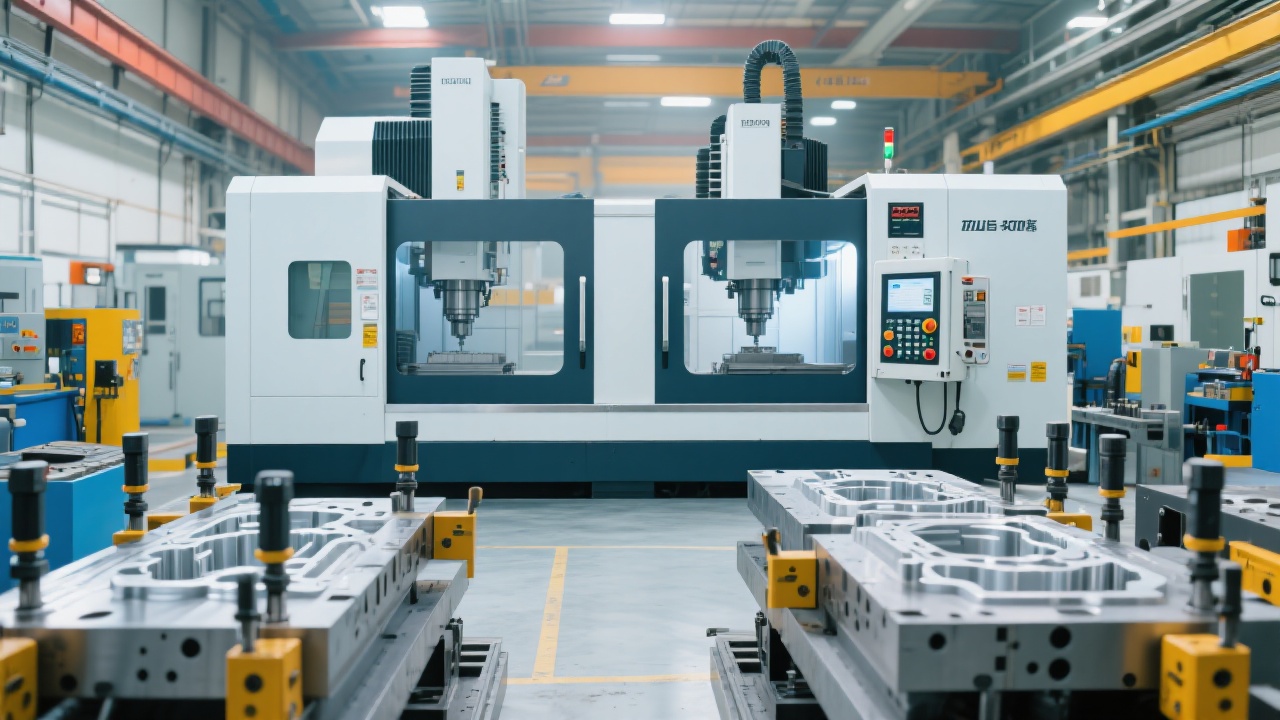
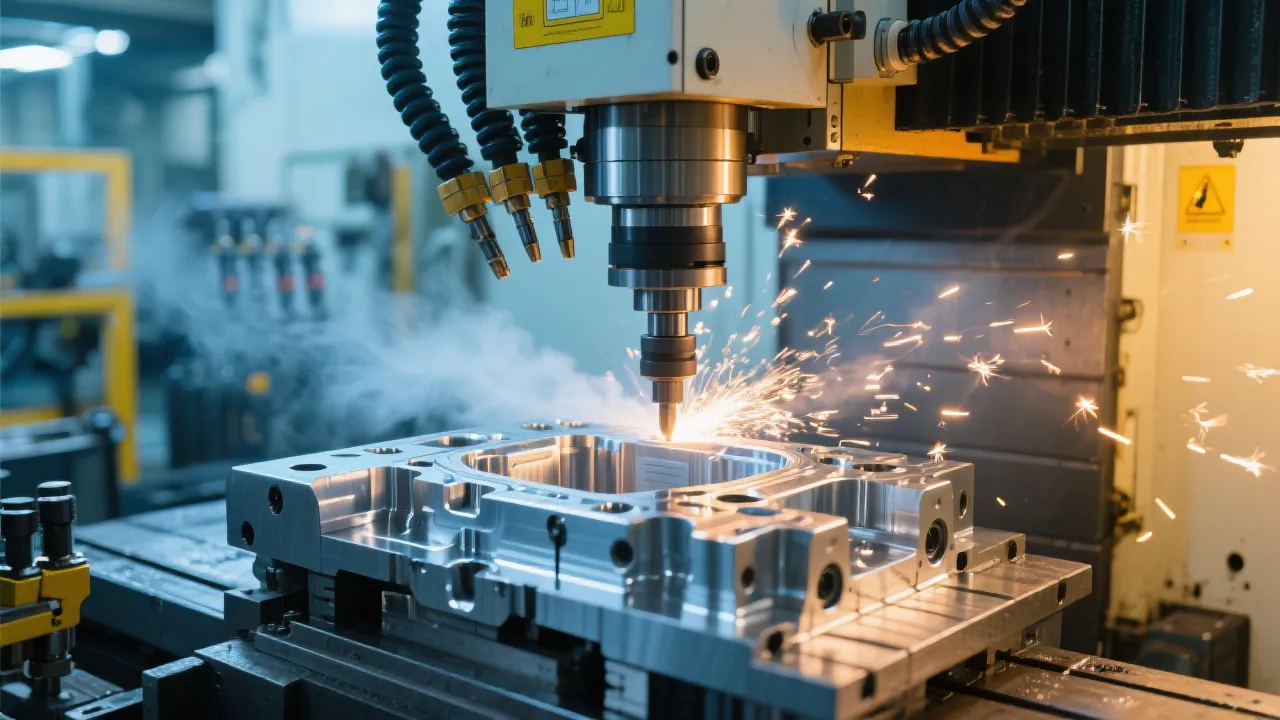
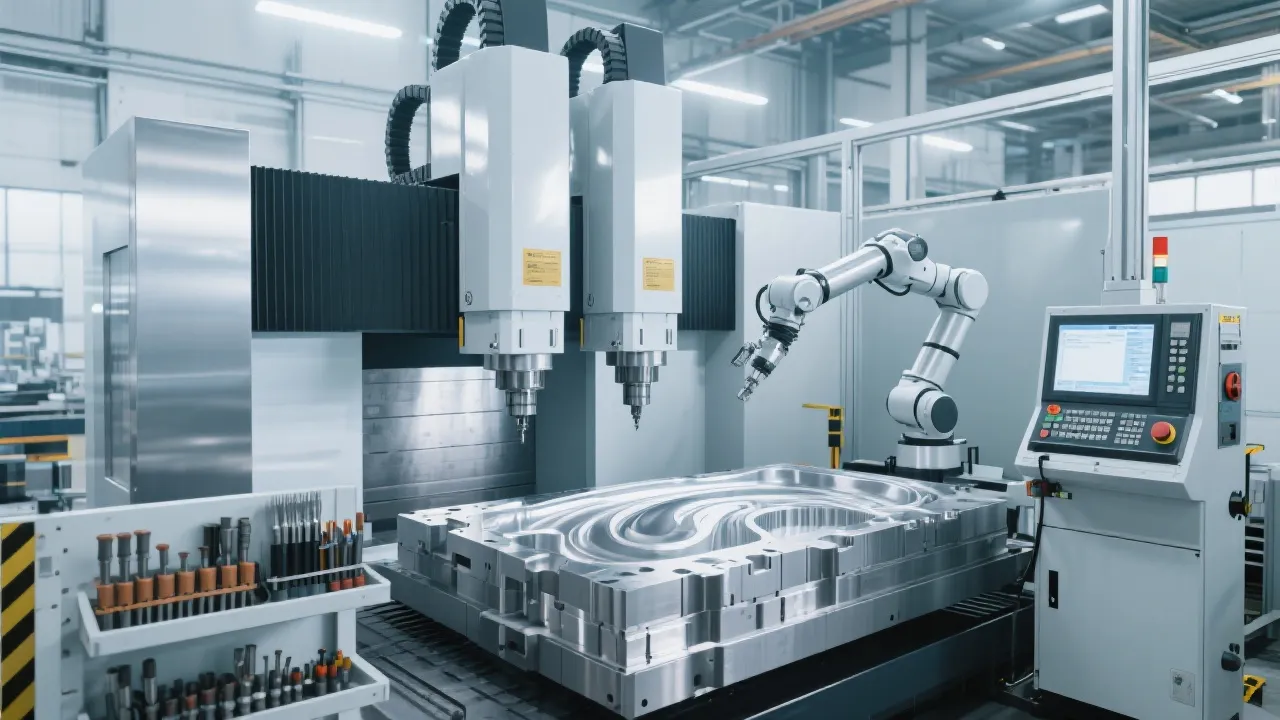
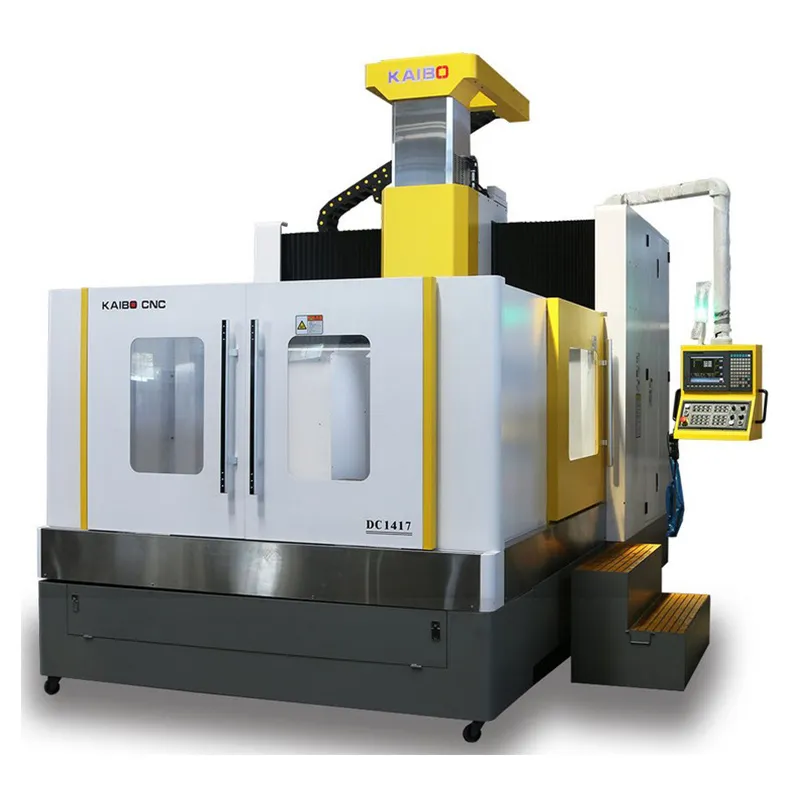
For plastic molds, the toughest areas are not the open surfaces—they are the deep slots, the transitions on freeform curves, and the micro-structures that are sensitive to vibration. A small double-column vertical CNC milling machine is often selected because the column structure supports rigidity while staying footprint-efficient for mold shops balancing space, throughput, and multi-machine workflows.
Deep ribs/grooves where tool overhang increases vibration risk
Fine texturing pre-machining and sharp corner transitions
Insert pockets and parting-line details needing high consistency
Process outcomes buyers track
Reduced variation between blocks and between shifts
Less re-cutting after spotting due to better initial geometry
More stable cycle planning for electrodes and inserts
Higher confidence when scaling from prototype mold to production mold
In decision-stage evaluations, engineers typically validate rigidity and motion quality by running the same finishing toolpath on a representative cavity area and comparing: scallop uniformity, corner smoothness, and post-polish time. Procurement teams look for documented repeatability practices (setup standards, offset control, and preventive maintenance routines) that reduce dependence on individual operator skill.
Traditional Milling vs CNC Milling in Mold Manufacturing: What Changes in Time, Consistency, and Scrap Risk
The comparison below reflects typical shop-floor outcomes when moving from conventional/manual milling workflows to CNC-controlled milling with optimized toolpaths and standardized setup. Actual results vary by steel grade (e.g., P20, H13), cavity complexity, and polishing standard, but the direction of improvement is consistent across mold categories.
Metric (Typical Mold Shop KPI)
Traditional / Manual Milling
CNC Milling (3-axis, optimized toolpaths)
Average cavity finishing time
Baseline
15–35% shorter (less re-cut + smoother motion)
Polishing/benching hours after machining
High variability by operator
10–25% reduction with consistent scallop and fewer marks
Tryout iterations before stable parts
Often 3–5 cycles on complex molds
Commonly reduced by 20–35% with better geometry control
Parting line/shut-off consistency
Sensitive to re-clamping and manual correction
More stable with fixed datums and repeatable offsets
Scrap / major rework probability on near-finished blocks
Moderate on deep features (human error & deflection)
Typically 10–20% lower with standardized programs and verification
Information graphic suggestions (for internal training or buyer education)
A Repeatable Playbook: From Toolpath to Trial Reduction (A Realistic Example)
A common improvement path in plastic mold shops is not “buy a faster machine,” but “remove avoidable variability.” One Kaibo CNC customer (consumer product mold, multiple inserts, deep ribs) reported a ~30% reduction in tryout cycles after standardizing three steps: datum strategy, finishing toolpaths with constant scallop control, and inspection checkpoints before polishing.
What changed in practice
Setup discipline: unified work coordinate rules across cavity/core and inserts; reduced re-clamping ambiguity.
3-axis linkage finishing: smoother transitions on curved surfaces and fewer “witness lines,” lowering benching time.
Verification before polishing: checking critical shut-offs early prevented expensive late-stage hand fixes.
For decision-makers, the takeaway is straightforward: reduced tryouts usually mean lower hidden costs and more predictable delivery. For engineers, the takeaway is equally practical: geometry stability is built through control of motion, datums, and tool engagement—not through polishing skill alone.
Selection Checklist for Upgrading CNC Milling in Mold Manufacturing
For engineering teams
Does the machine hold stable finishing on deep features with long tool reach?
Is 3-axis interpolation smooth enough to reduce corner marks on freeform surfaces?
Are probing, work offsets, and repeatable setup routines supported?
Can the process plan include rough → semi-finish → finish with measurable checkpoints?
For management & procurement
Will it reduce reliance on a few operators by standardizing programs and setups?
Is after-sales support capable of sustaining uptime (training, parts, remote guidance)?
Can lead time improve without sacrificing mold accuracy and surface requirements?
Does the supplier provide application proof points in similar mold structures?
Want to Validate Fit Before You Invest?
If you want to evaluate how a compact double-column vertical CNC milling machine can be matched to your plastic mold geometry, finishing targets, and tryout goals, Kaibo CNC has prepared an application-focused resource center for decision-stage teams.
Suggested inputs for faster assessment: parting line length, deepest groove depth, minimum internal radius, steel grade, and current tryout count per mold.


.png?x-oss-process=image/resize,h_100,m_lfit/format,webp)
.png?x-oss-process=image/resize,h_100,m_lfit/format,webp)
.png?x-oss-process=image/resize,h_100,m_lfit/format,webp)