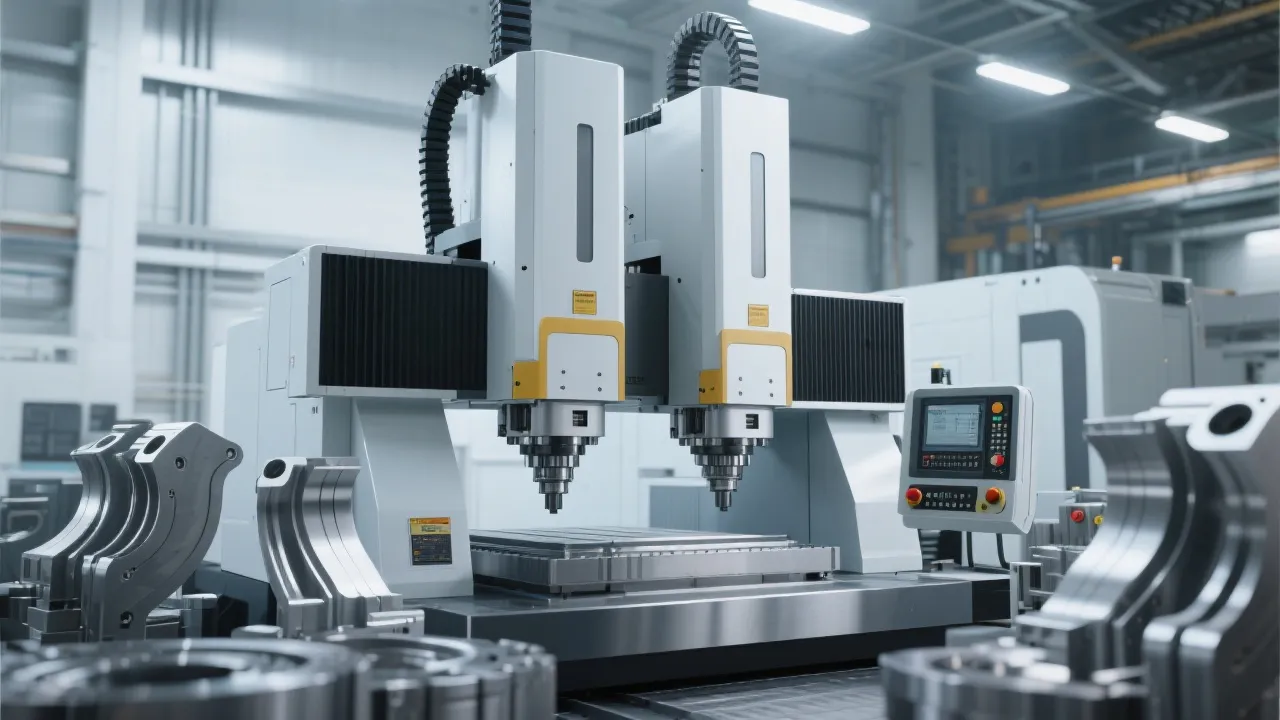
GJ1417 High-Precision CNC Gantry Milling Machine for Stainless Steel: Technical Advantages and Application Guide
2026-03-22
Technical knowledge
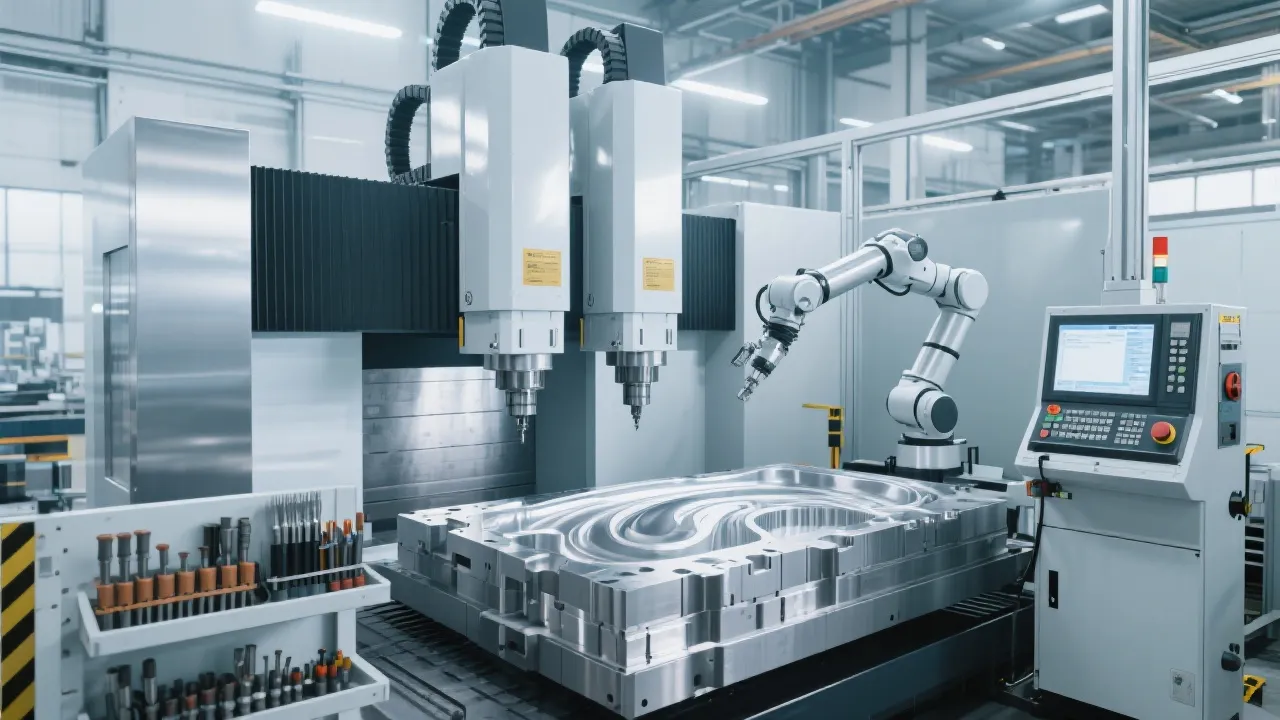
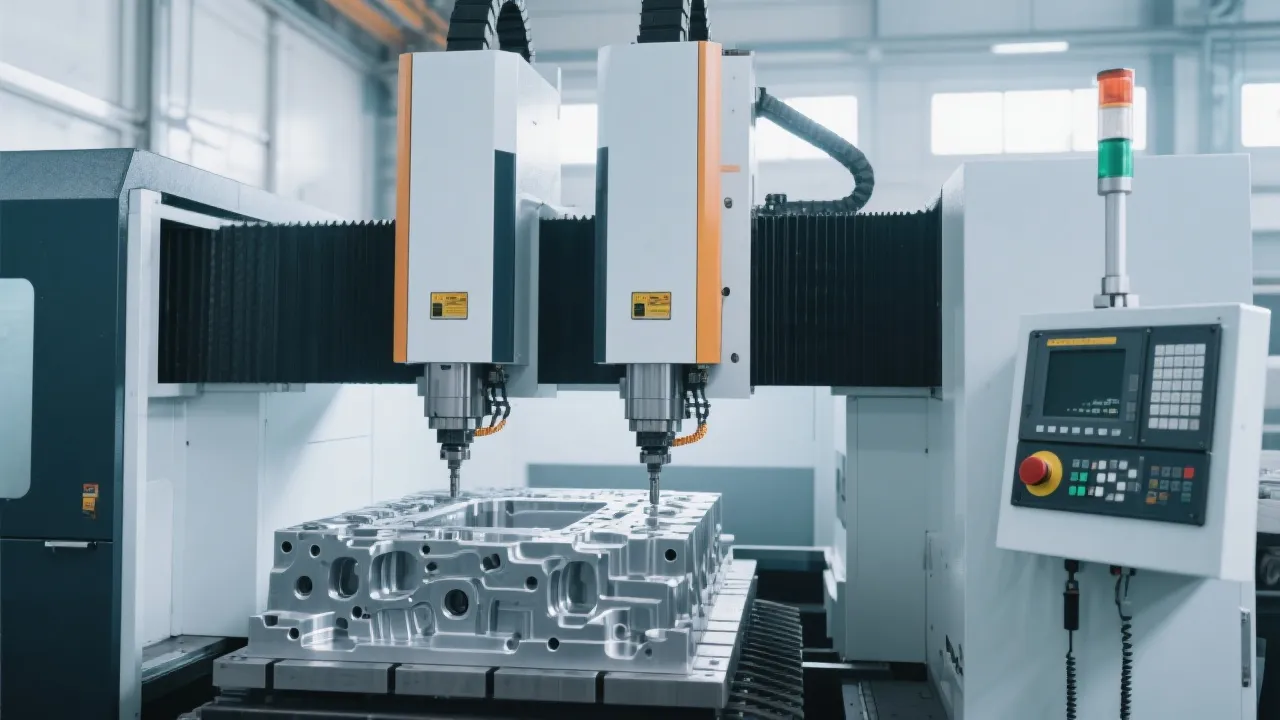
This article provides a decision-stage, technical yet practical overview of the GJ1417 high-precision CNC gantry milling machine engineered for demanding stainless-steel and multi-material machining. Designed as a high-performance gantry machining center with a large working envelope, the GJ1417 emphasizes accuracy and repeatability through a high-precision ball-screw drive system, optional glass scale feedback for enhanced positioning control, and high-rigidity linear guideways to maintain stability under heavy cutting loads. Configurable multi-axis architectures and an HSK high-speed spindle option help address complex geometries and ultra-precision finishing requirements, while advanced CNC capabilities such as HPC functions and an automatic tool changer support efficient, consistent production. By linking core design features to typical stainless-steel applications, the guide explains how the GJ1417 contributes to tighter tolerances, reduced scrap rates, and higher throughput, offering machining teams and procurement decision-makers a clear basis for evaluating performance, configurability, and long-term adaptability in ultra-precision manufacturing.

Why the GJ1417 High‑Precision Gantry CNC Milling Machine Is a Practical Choice for Ultra‑Precision Stainless Steel Machining
In stainless steel production, “precision” is not a slogan—it’s the difference between stable assembly and recurring rework. Procurement teams want predictable delivery, while engineering leaders want repeatability across shifts, operators, and batches. The GJ1417 is positioned as a high‑performance gantry machining center designed for demanding, complex processes where tight tolerances, surface finish, and long cycle stability matter.
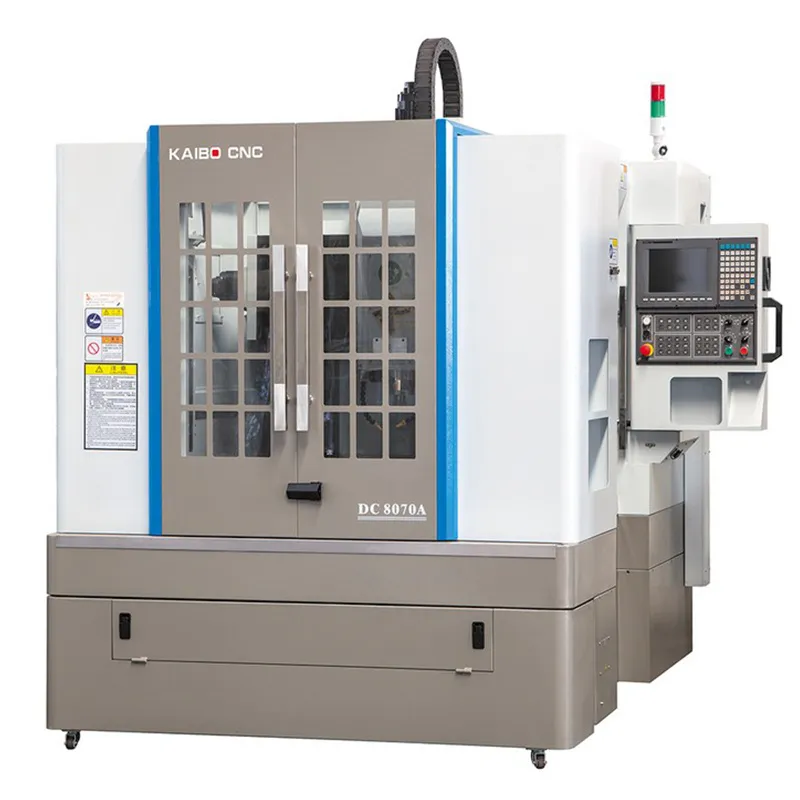
Built by 凯博数控, the GJ1417 combines a large working envelope, a precision ballscrew transmission system, optional glass scale feedback, high‑rigidity linear guideways, and multi‑axis configurations—features that directly address common stainless steel machining challenges such as tool wear sensitivity, thermal drift, and vibration under heavy cutting.
What Decision‑Makers Should Evaluate (Beyond the Spec Sheet)
Many buyers compare machines by spindle power or table size first. For stainless steel and high‑mix precision parts, the more telling indicators are positioning stability, structural rigidity, and closed‑loop accuracy options. These determine whether the same program produces the same part on day 1 and day 90.
Quick Reality Check for Stainless Steel CNC Milling
- Heat + force: stainless steels generate heat and cutting resistance, magnifying any rigidity weaknesses.
- Vibration = finish loss: chatter pushes you into conservative feeds, lowering throughput.
- Thermal drift: longer cycles and heavier cuts often require better feedback/compensation.
- Tool wear variability: stable, repeatable motion helps keep size control consistent across tool life.
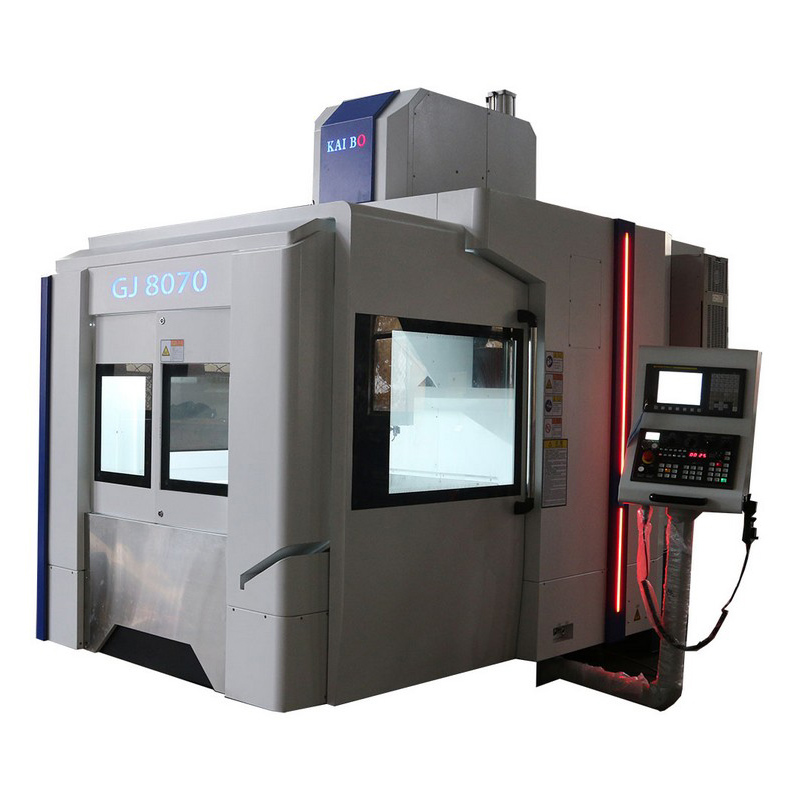
Technical Advantages That Translate into Measurable Shop‑Floor Results
1) Precision ballscrew transmission: smoother motion, steadier size control
The GJ1417 is engineered around a high‑precision ballscrew transmission concept to support stable feed behavior during both roughing and finishing. For stainless steel, that stability matters because the material’s cutting load can amplify micro‑backlash and stick‑slip effects. A well‑executed ballscrew system supports more predictable contouring and improves consistency in repeated interpolations.
In real production environments, shops often see 10–25% improvement in dimensional consistency (measured as reduced dispersion across batches) when moving from worn/low‑rigidity feed systems to better‑tuned precision transmission platforms—especially on long contours or multi‑feature parts.
2) Optional glass scale feedback: closed‑loop confidence for ultra‑precision demands
When tolerances tighten and cycles get longer, feedback quality becomes a deciding factor. The GJ1417 can be configured with glass scale positioning, helping reduce the impact of transmission errors and providing more confident positioning under changing thermal conditions.
In many precision milling applications, adopting linear scale feedback can reduce positioning deviation to the single‑digit micron range in controlled conditions, and more importantly, help keep repeatability stable over multi‑shift operations—where the true cost is scrap, rework, and inspection delays rather than nominal accuracy on paper.
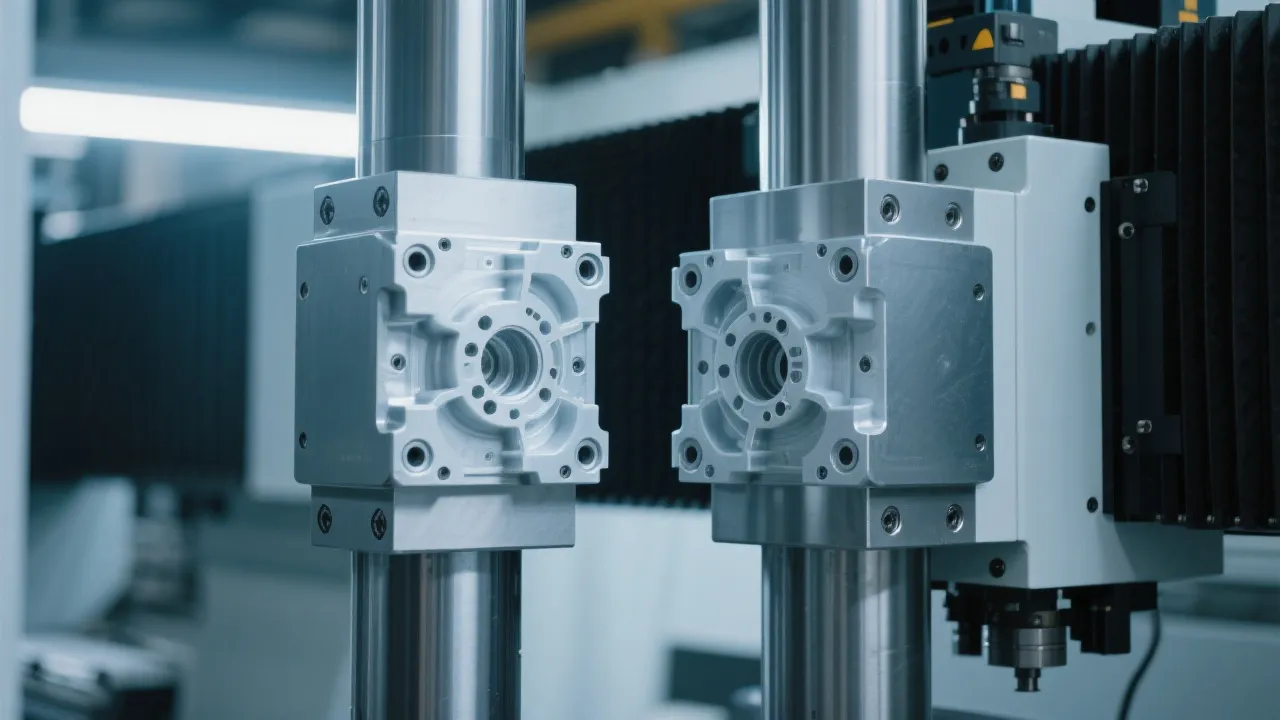
3) High‑rigidity linear guideways: better finish at higher removal rates
Stainless steel milling rewards rigidity. High‑rigidity linear guideways support smoother load transitions and help suppress vibration, enabling higher feed rates at comparable surface quality. This matters most on large plates, frames, manifolds, and welded assemblies where interrupted cuts are common and deflection can ruin parallelism or flatness.
When vibration is controlled, many shops can move from “safe” parameters to “productive” parameters and still pass inspection, often cutting cycle time by 8–18% on typical stainless rough‑to‑finish workflows.
4) Multi‑axis capability + HSK high‑speed spindle options: versatility without sacrificing control
Complex stainless parts—pockets, angled faces, multi‑datum features, and blended contours—benefit from multi‑axis configurations. With suitable spindle and tooling choices (including HSK high‑speed spindle options for demanding finishing), the GJ1417 can support both heavy cutting and high‑quality surface generation.
For buyers, the key is not “maximum RPM,” but whether the spindle/tool interface and machine stiffness maintain stable cutting at the needed speed range, especially for finishing passes that must hit both size and surface targets.
5) Production efficiency features: ATC + HPC for fewer stoppages, faster throughput
For decision‑stage buyers, “precision” must also be “productive.” Configuration options such as an automatic tool changer (ATC) reduce non‑cutting time, while HPC functions (commonly associated with high‑performance machining strategies) support smoother toolpaths and better acceleration management on complex contours.
In high‑mix environments, reducing tool change and setup interruptions can realistically improve overall equipment effectiveness (OEE) by 5–12%, particularly where many parts require frequent tool swaps and probing/verification steps.
Typical Stainless Steel Applications Where the GJ1417 Fits Naturally
The GJ1417 is suited for manufacturers who need a gantry platform with stable geometry across a large working area and repeatable accuracy under real cutting loads. Typical use cases include:
Process Equipment & Skids
Stainless baseplates, large frames, mounting faces requiring flatness and parallelism control.
Valve, Pump & Manifold Parts
Complex pockets and sealing faces; repeatability across batches reduces leakage risk.
Food & Pharma Stainless Components
Surface and edge quality matter; stable finishing reduces polishing and manual touch‑ups.
Molds, Fixtures & Precision Tooling
Tight fits and multi‑feature datums benefit from closed‑loop feedback and rigid motion.
A decision-stage question worth asking: Are you currently controlling quality by slowing down feeds and adding extra inspection steps? If yes, a higher-stability platform often pays back faster than expected—because it removes hidden costs (rework hours, delayed shipments, QA bottlenecks) rather than chasing theoretical peak speed.
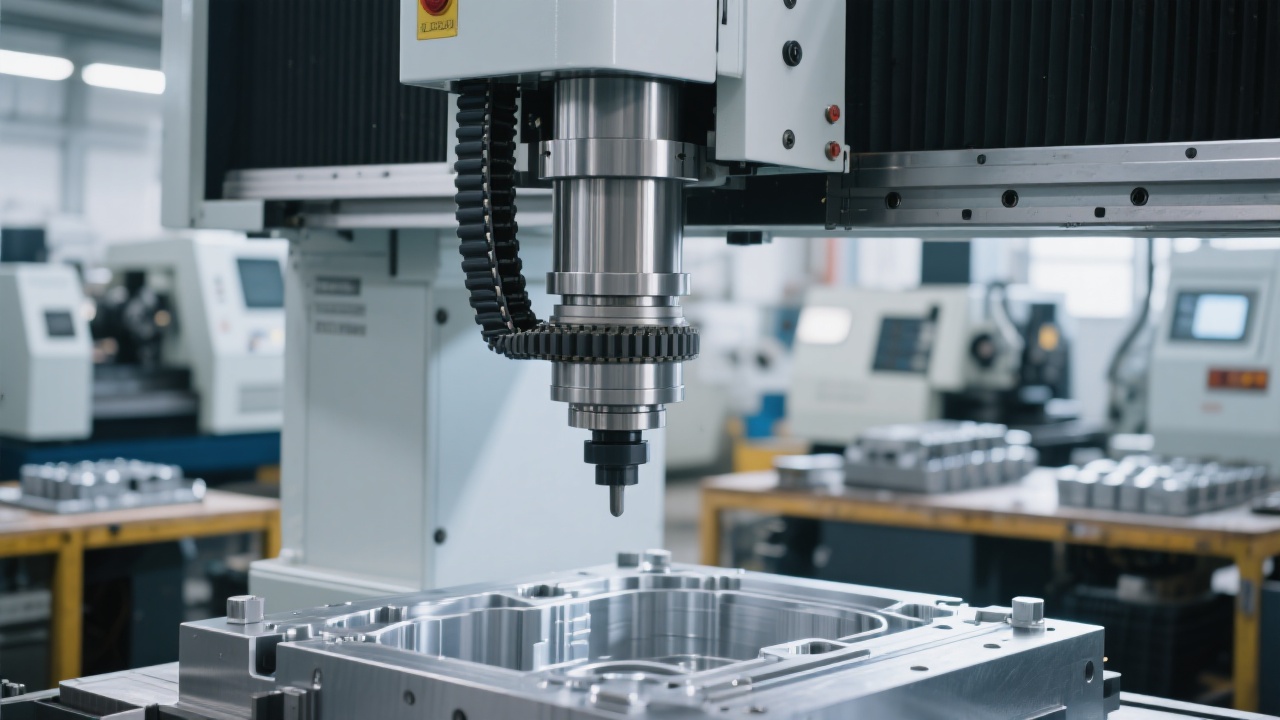
Performance Snapshot: What Shops Commonly Improve After Upgrading
Actual results depend on tooling, programs, fixturing, and inspection method. Still, in stainless steel milling projects where a more rigid, more repeatable platform replaces an older or lighter machine, manufacturers frequently report improvements similar to the reference ranges below:
| Metric |
Common Baseline Issue |
Reference Improvement Range |
| Scrap / rework rate |
Size drift, inconsistent finish, datum instability |
15–40% reduction |
| Cycle time |
Conservative feeds due to vibration risk |
8–18% reduction |
| First-pass yield (FPY) |
Extra finishing, repeated inspection loops |
5–15% increase |
| Operator dependency |
Results vary by shift or setup habits |
Noticeable reduction with stable feedback & process windows |
Reference ranges are industry-typical outcomes from process stabilization and rigidity/feedback upgrades, used here for planning and discussion. Validation should be done via sample cutting, metrology reports, and acceptance criteria.
Mini Case: From “Inspection-Heavy” to “Process‑Stable” Stainless Production
A mid-size machining company producing stainless steel equipment plates struggled with flatness rejections and frequent manual blending after finishing. Parts were technically within tolerance on good days, but variation across shifts caused repeated QA holds.
After moving production to a more rigid gantry platform configured for higher positioning confidence (including closed-loop feedback in critical axes) and optimizing toolpaths for stable engagement, they reported:
- Scrap/rework down by approximately 28% over 10 weeks
- Cycle time reduced by around 12% on the top 3 part numbers
- Surface finishing labor reduced by about 20% due to fewer vibration marks
The financial impact was not only in machine hours saved, but also in smoother scheduling: fewer urgent re-runs meant more stable delivery performance to their OEM customers.
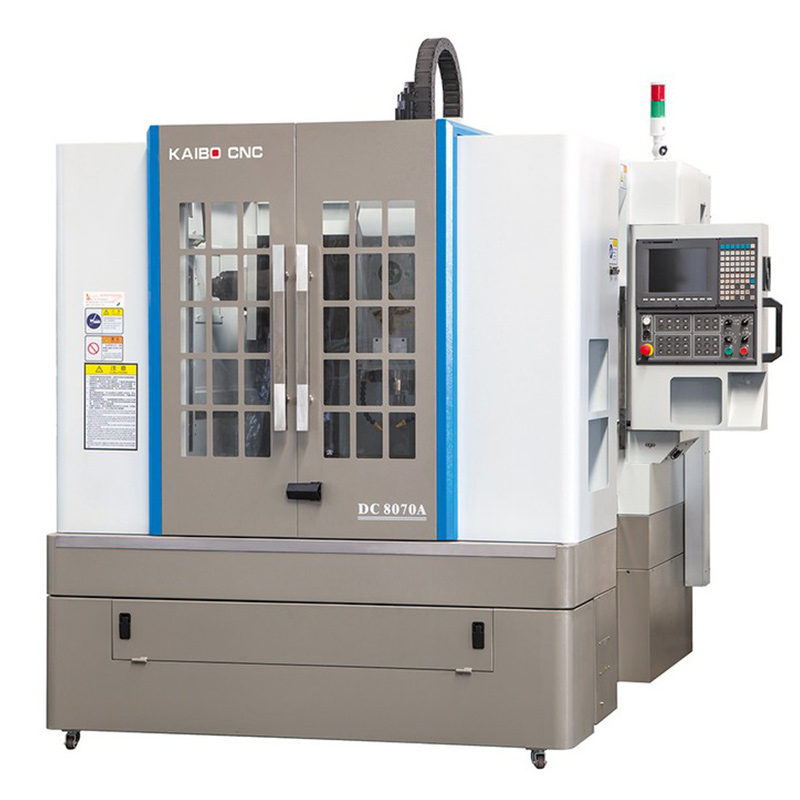
Configuration Flexibility: Building a Machine That Matches Your Future Work
Many machining centers look competitive until your product mix changes. The GJ1417 is designed to remain relevant as requirements evolve—new stainless grades, more complex geometries, tighter GD&T, or higher throughput expectations.
Common upgrade paths buyers ask for
- Glass scale feedback for tighter stability and more confident acceptance criteria
- HSK spindle options for higher-speed finishing and better tool interface behavior
- Multi‑axis configuration to reduce setups and improve geometric consistency
- ATC capacity planning for high-mix production and fewer manual interventions
- HPC-oriented control strategies for smoother contouring and stable acceleration behavior
If your current bottleneck is “we can machine it, but we can’t do it reliably at volume,” configuration flexibility is often the shortest route to predictable output.
Ready to Verify Ultra‑Precision Performance on Your Stainless Parts?
Share your material grade, part size, tolerance targets, and annual volume. 凯博数控 can recommend an optimized GJ1417 configuration (ballscrew system, optional glass scale, HSK spindle, multi‑axis, ATC/HPC features) and align it with your inspection and acceptance requirements.
One last question to guide your final decision
If your customer tightens tolerance by 20% next quarter, will your current setup still hit the target without adding inspection steps, slowing feeds, or increasing polishing time?


.png?x-oss-process=image/resize,h_100,m_lfit/format,webp)
.png?x-oss-process=image/resize,h_100,m_lfit/format,webp)
.png?x-oss-process=image/resize,h_100,m_lfit/format,webp)