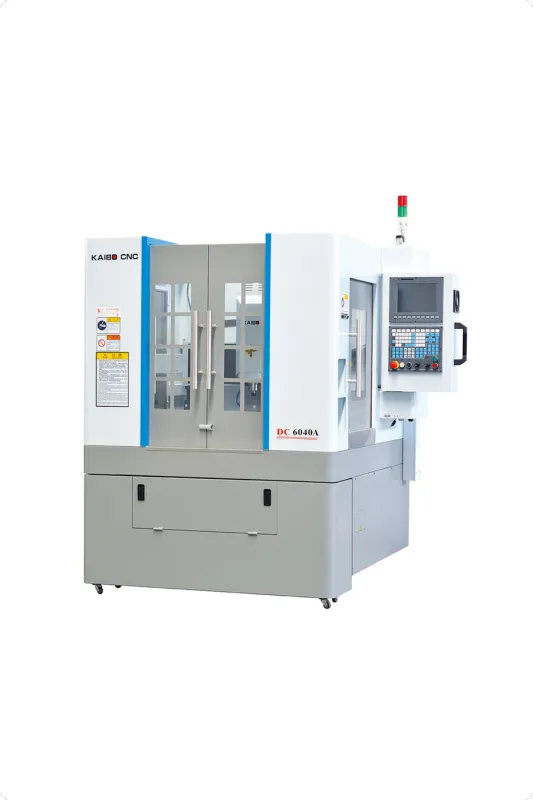
Manufacturing complex stainless steel components presents formidable challenges in precision and throughput. Based on extensive real-world application with the high-precision CNC milling machine GJ1417, this article delivers five proven techniques that elevate both machining quality and efficiency. Whether you are a newcomer to precision milling or an expert seeking near-perfect performance, these hands-on strategies are crafted for immediate application, driving significant reductions in cycle time and scrap.
Managing stainless steel's work-hardening tendency is crucial. GJ1417 operators have achieved dimensional accuracy within ±0.005mm by carefully balancing spindle speeds and feeds, using cutting speeds around 80–120 m/min and feed per tooth from 0.05 to 0.12 mm. Employing trochoidal milling paths reduces heat buildup, minimizing tool wear and thermal distortion—key to maintaining tight tolerances during extended cycles.
The fixture setup must prevent vibrations and part movement without deforming delicate stainless workpieces. Use modular clamping systems paired with soft-touch inserts for areas prone to deformation. For aerospace and medical device parts, GJ1417’s users integrate custom-designed multi-point clamps, ensuring uniform pressure distribution and high repeatability during batch production.
Thermal expansion can compromise the surface finish and final accuracy. The advanced liquid cooling system in GJ1417 delivers consistent coolant flow at optimized pressure levels (typically 4-6 bar) directed precisely to cutting zones. Real-time temperature monitoring through thermal sensors embedded near the spindle allows immediate adjustment of coolant parameters, reducing workpiece temperature spikes and maintaining material integrity.
Frequent tool changes typically extend non-cutting time and risk setup errors. GJ1417’s integrated automatic tool changer (ATC) features intelligent scheduling synchronized with the CNC program, reducing tool swap time to under 8 seconds. Operators report up to 25% uptime improvement compared to legacy machines, directly translating into higher daily outputs with less operator intervention.
Utilizing GJ1417’s real-time data acquisition system, operators gain access to live feedback on vibration, spindle load, and cutting forces. This data informs adaptive machining strategies—automatically adjusting feeds and speeds—to mitigate tool breakage and scrap rates. Facilities deploying this technology have seen defective part rates decrease by over 30%, streamlining inspection workflows and reducing rework.
In aerospace manufacturing, where surface finishes of Ra ≤ 0.8 µm are mandatory, the GJ1417 consistently meets stringent specifications with minimal operator intervention. Medical device producers rely on its adaptability for small-batch surgical tool milling, benefiting from rapid changeovers and precise geometric replication.
| Technique | Key Benefit | Quantified Impact |
|---|---|---|
| Cutting Parameter Optimization | Improved surface finish and reduced tool wear | ±0.005mm tolerance; tool life increased by 20% |
| Fixture Design Precision | Eliminates workpiece vibration, ensures repeatability | Reduction of scrap by 15% |
| Thermal Control Management | Maintains part dimensional stability during cycles | Surface defects decreased by 25% |
| Automated Tool Change | Maximized machine uptime | +25% productivity |
| Intelligent Feedback System | Real-time process optimization | Defect rate lowered by 30% |
The GJ1417 sets a new benchmark in precision, speed, and reliability compared to traditional milling machines. Its generation leap-forward capabilities empower manufacturers to confidently tackle intricate stainless steel components with consistent, 省时省心 (time-saving and worry-free) workflows.
We invite readers to share: What challenges have you faced when milling stainless steel parts in your operations? Drop your insights and questions below to foster shared learning and innovation.
Discover How GJ1417 Can Transform Your Stainless Steel Milling Today Graphite Electrode
Market Analysis
Industry Trends
Electrode Production
Graphite Market
DC6040D
CNC milling machine
user experience
market feedback
machining technology
full-sealed design
equipment lifespan
industrial equipment
durability
preventive maintenance
CNC engraving machine
precision aluminum molds
export machinery
milling technology
manufacturing solutions
DC8070A 4-axis CNC milling machine with automatic tool change
high-precision machining technology
advanced control systems
precision mechanical structures
automatic tool change device precision positioning
Graphite Electrode
Market Analysis
Industry Trends
Electrode Production
Graphite Market
DC6040D
CNC milling machine
user experience
market feedback
machining technology
full-sealed design
equipment lifespan
industrial equipment
durability
preventive maintenance
CNC engraving machine
precision aluminum molds
export machinery
milling technology
manufacturing solutions
DC8070A 4-axis CNC milling machine with automatic tool change
high-precision machining technology
advanced control systems
precision mechanical structures
automatic tool change device precision positioning




.png?x-oss-process=image/resize,h_100,m_lfit/format,webp)
.png?x-oss-process=image/resize,h_100,m_lfit/format,webp)
.png?x-oss-process=image/resize,h_100,m_lfit/format,webp)